Pure Peptides Australia
MOTS-C – Research Peptide | Pure Peptides Australia
MOTS-C – Research Peptide | Pure Peptides Australia
Not for human, veterinary, diagnostic, or therapeutic use.
Mitochondrial research compound
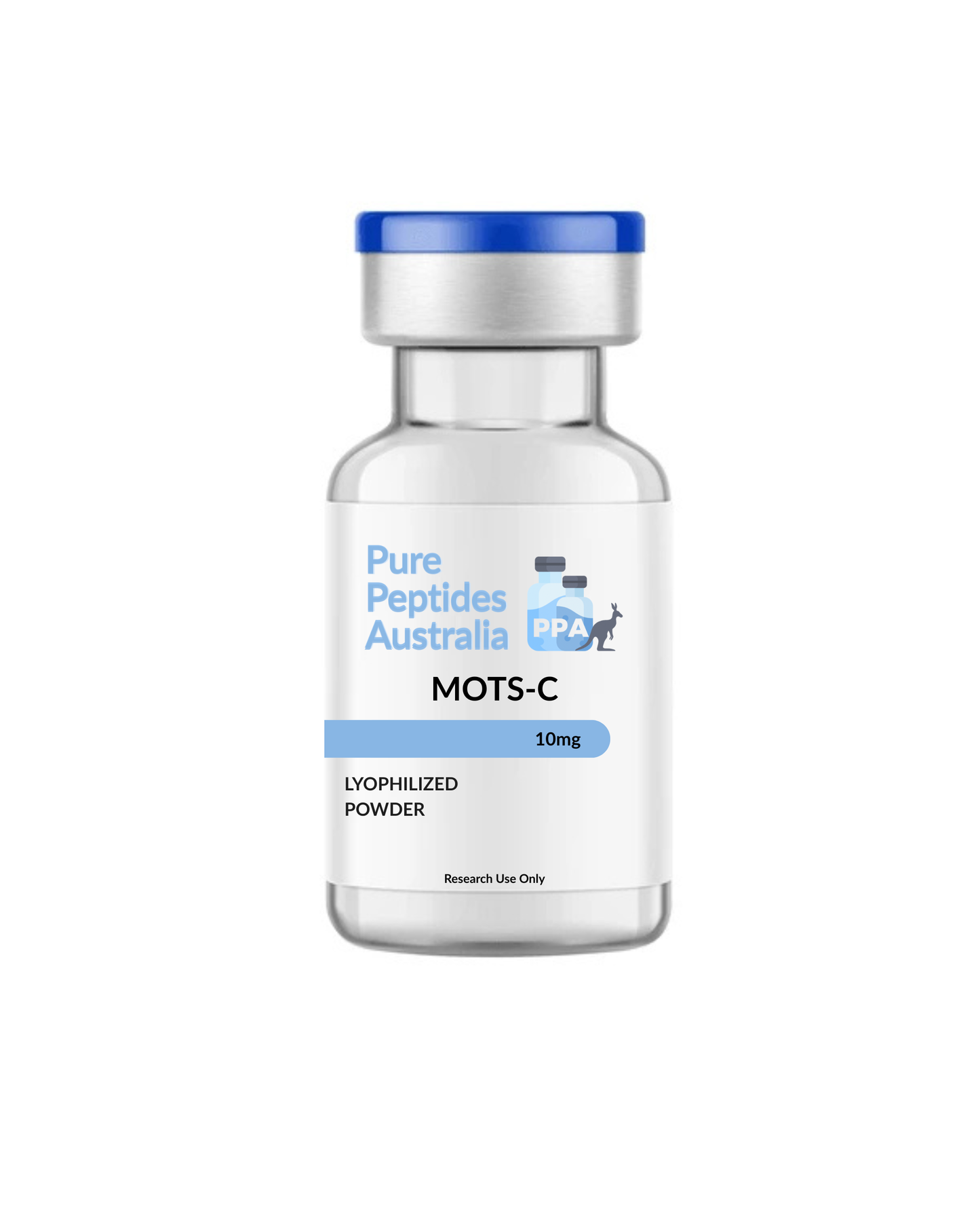
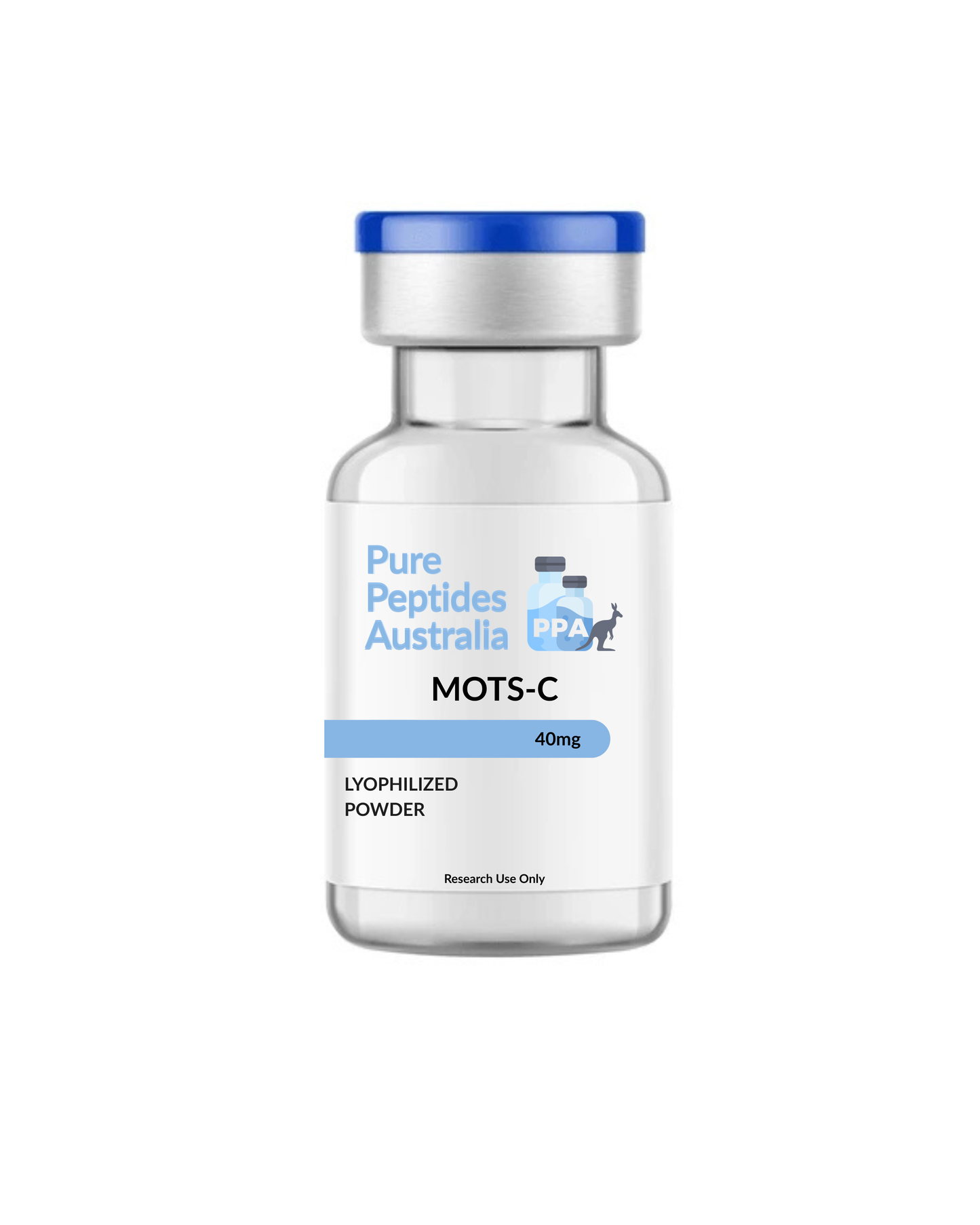
MOTS-c (10mg and 40mg): Mitochondrial-Derived Peptide for Metabolic Research
MOTS-c is a 16-amino-acid peptide encoded not in the cell nucleus but in the mitochondrial genome, in a short open reading frame inside the 12S ribosomal RNA gene. Discovered by Changhan Lee and Pinchas Cohen at USC in 2015, it is one of a small family of mitochondrial-derived peptides and is studied for its role in metabolic homeostasis, insulin sensitivity and the cellular response to exercise. Searched as mots-c australia, mots c peptide, motsc and mitochondrial peptide.
Pure Peptides Australia holds MOTS-c in Sydney stock in 10mg and 40mg vials, each lyophilised and Janoshik tested before listing. Orders confirmed before 12pm AEST on a business day are dispatched the same day with tracked delivery Australia-wide.
- MOTS-c
- MOTS c
- MOTSC
- Mitochondrial ORF of the 12S rRNA-c
- Mitochondrial-derived peptide
- Exercise mimetic
Why it is studied
Most peptides act on a receptor at the cell surface. MOTS-c is different: under metabolic stress it moves from the cytoplasm into the nucleus and regulates gene expression directly, activating AMPK, the enzyme that switches cells toward energy conservation and glucose uptake. Because that is the same pathway exercise activates, MOTS-c is described in the literature as an exercise mimetic, and its circulating levels fall with age. Those two facts put it at the centre of research on ageing, insulin resistance and physical performance.
Key research areas
Insulin sensitivity
Lee et al. (Cell Metabolism 2015) reported that MOTS-c prevented diet-induced obesity and insulin resistance in mice, acting through the folate-methionine cycle and AMPK.
Exercise and performance
Reynolds et al. (Nature Communications 2021) reported that MOTS-c rose in human skeletal muscle and plasma after exercise, and that treated aged mice doubled running capacity.
Ageing and healthspan
Circulating MOTS-c declines with age. Late-life treatment in mice improved metabolic markers and physical function in the same 2021 study.
Nuclear gene regulation
Kim et al. (Cell Metabolism 2018) showed MOTS-c translocates to the nucleus under stress and regulates antioxidant response element genes, a mitochondrial-to-nuclear signal.
Bone and muscle
Studied in osteoporosis models for osteoblast activity and in sarcopenia models for muscle mass retention.
Population genetics
A single-nucleotide variant (m.1382A>C) in the MOTS-c sequence is associated with altered diabetes risk in East Asian populations, tying the peptide to human metabolic variation.
How MOTS-c works
MOTS-c inhibits the folate cycle, which depletes purines and raises AICAR, an endogenous AMPK activator. AMPK activation increases glucose uptake and fatty-acid oxidation in muscle and dampens the anabolic signalling that drives fat storage. Separately, under glucose restriction or oxidative stress, MOTS-c enters the nucleus and binds transcription factors including NRF2, switching on stress-response genes. It has no known cell-surface receptor, so it is studied as an intracellular signalling peptide rather than a hormone. Its half-life in circulation is short, in the order of minutes, and it is cleared quickly, which is why research models typically use repeated administration.
Compared with SS-31, which stabilises the inner mitochondrial membrane by binding cardiolipin, MOTS-c works on the signalling side, telling the cell how to respond to mitochondrial stress rather than protecting the mitochondria directly. The two are often studied together for that reason.
Specifications
| Compound | MOTS-c |
| Also known as | MOTS c, MOTSC, mitochondrial open reading frame of the 12S rRNA type-c, mitochondrial-derived peptide, MDP |
| CAS number | 1627580-64-6 |
| Molecular formula | C101H152N28O22S2 |
| Molecular weight | 2174.6 g/mol |
| Sequence | MRWQEMGYIFYPRKLR (16 amino acids) |
| Category | Longevity and metabolic research |
| Purity | ≥99% HPLC, batch COA supplied (Janoshik Analytical) |
| Form | Lyophilised powder in a sealed sterile vial |
| Vial sizes | 10mg, 40mg |
| Storage (lyophilised) | -20°C, protect from light, avoid freeze-thaw |
| Storage (reconstituted) | 2 to 8°C, use within 28 days |
| Reconstitution | Bacteriostatic water |
Sizes and pricing in Australia
10mg for a single arm, 40mg for extended work at a third less per mg
| Vial | Price | Per mg | Yields |
| 10mg | $99.99 | $10.00 | Ten 1mg or four 2.5mg |
| 40mg | $269.99 | $6.75 | Forty 1mg or sixteen 2.5mg |
Published MOTS-c models use repeated administration over weeks, so a 10mg vial covers a short arm and the 40mg covers a longer protocol or a multi-arm design from one batch.
Reconstitution
Wipe the stopper, draw bacteriostatic water and run it slowly down the inside wall of the vial rather than onto the powder. Swirl gently until clear, never shake. Refrigerate at 2 to 8°C and use within 28 days.
| Vial | Water added | Concentration | 1mg on a U-100 syringe |
| 10mg | 1mL | 10mg/mL | 10 units |
| 10mg | 2mL | 5mg/mL | 20 units |
| 40mg | 2mL | 20mg/mL | 5 units |
| 40mg | 4mL | 10mg/mL | 10 units |
The reconstitution calculator runs the maths for any target.
Quality and COA verification
Every batch is tested by Janoshik Analytical: HPLC purity, mass-spec identity against 2175 g/mol, heavy metals and endotoxin. The batch number on the label matches the certificate.
Sydney stock, tracked delivery
No international transit or customs queue. Orders cleared before 12pm AEST leave the same business day; Express Post reaches most metro addresses in one to three business days.
Frequently bought together
$79.99. The cardiolipin-binding mitochondrial peptide.
$129.99. The coenzyme at the centre of mitochondrial energy production.
From $99.99. The metabolic peptide most often run alongside MOTS-c.
10mL $29.99, 3mL $14.99. Required for reconstitution.
MOTS-c Australia FAQ
What is MOTS-c?
A 16-amino-acid peptide encoded in the mitochondrial genome, discovered in 2015. It activates AMPK and regulates nuclear gene expression under metabolic stress, and it is studied for insulin sensitivity, exercise capacity and ageing.
What is MOTS-c also known as?
MOTS c, MOTSC, mitochondrial open reading frame of the 12S rRNA type-c, and more generally a mitochondrial-derived peptide or MDP. The exercise mimetic label comes from the 2021 Nature Communications paper.
How does MOTS-c work?
It inhibits the folate cycle, raising AICAR and activating AMPK, which increases glucose uptake and fat oxidation. Under stress it also moves into the nucleus and switches on antioxidant response genes. It has no cell-surface receptor.
What does the research show?
In mice, MOTS-c prevented diet-induced obesity and insulin resistance (2015), doubled running capacity in aged animals and improved late-life metabolic function (2021). In humans, levels rise after exercise and fall with age. All findings are preclinical or observational.
Is MOTS-c an exercise mimetic?
That is the term used in the literature because it activates the same AMPK pathway exercise does and improved performance in animal models. It is a research description, not a claim about human use.
MOTS-c vs SS-31: what is the difference?
SS-31 binds cardiolipin in the inner mitochondrial membrane and protects mitochondrial structure. MOTS-c is a signalling peptide that tells the cell how to respond to mitochondrial stress. They are studied together for that reason.
Can I buy MOTS-c at Chemist Warehouse in Australia?
No. MOTS-c is not a registered medicine anywhere and is not stocked by any Australian pharmacy. It is available only as a research-grade lyophilised vial.
How do you reconstitute MOTS-c?
Add bacteriostatic water slowly down the inside wall of the vial, swirl gently until clear, never shake, refrigerate at 2 to 8°C and use within 28 days. 2mL into the 10mg gives 5mg/mL, so 1mg is 20 units.
How should MOTS-c be stored?
Lyophilised at -20°C, away from light, without repeated freeze-thaw. Reconstituted at 2 to 8°C and used within 28 days.
Is MOTS-c available in Australia?
As a research compound, yes: Pure Peptides Australia holds 10mg and 40mg vials in Sydney with same-day dispatch. As a medicine, no. As of October 2026 it is not TGA approved.
Where can I buy MOTS-c in Australia?
From this page. Choose a size, check out with card, PayID, Osko or bank transfer, and the vial leaves Sydney the same business day when payment clears before 12pm AEST, tracked to any Australian address.
What does MOTS-c cost in Australia?
$99.99 for 10mg ($10.00 per mg) or $269.99 for 40mg ($6.75 per mg). No surcharge on PayID, Osko or bank transfer.
Is MOTS-c legal in Australia?
Pure Peptides Australia supplies it strictly for lawful in-vitro laboratory research. It is not approved by the TGA for human or veterinary use and is not sold as a medicine, supplement or therapeutic good. Purchasers are responsible for ensuring their use complies with applicable laws.